- experience
- engage
- enjoy
Major restoration project returns much-loved river to its natural state
Publish Date: Wednesday November 12, 2025
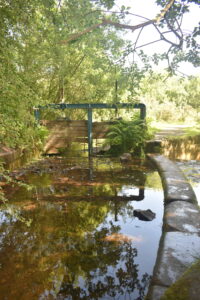
A 700-metre section of the Back Burn has been restored to follow its original course at Coul Den reservoir, Glenrothes, boosting biodiversity and nature, and bringing benefits to local communities.
Also known locally as the Coul and Conland Burn, many man-made changes have affected the Back Burn over time.
When the reservoir was built for Haig’s Whisky Distillery, the burn’s original course was diverted. Most of the flow was channelled under a sluice gate and through a bywash channel around the edge of the reservoir and hillside.
Artificial infrastructure
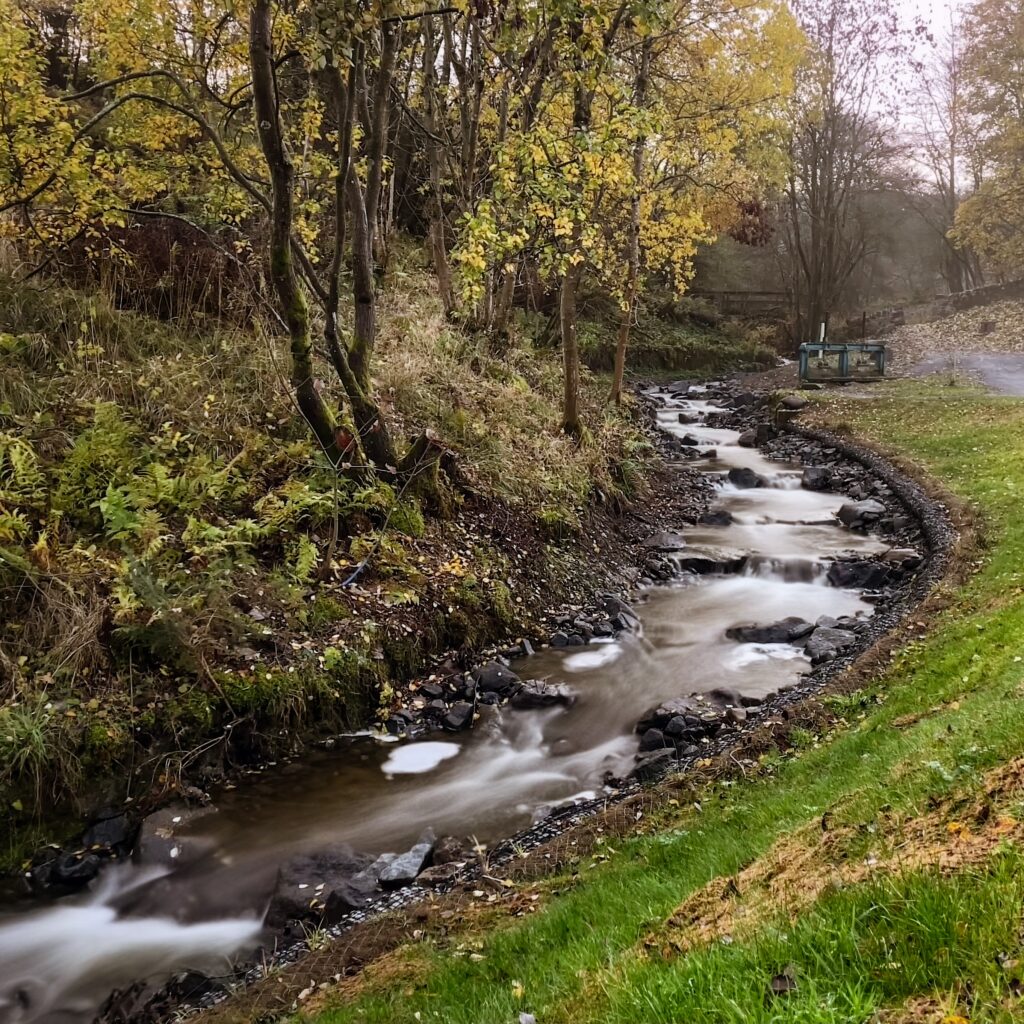
Much of the old artificial infrastructure has been removed this summer, like wire baskets filled with stones (gabions). In its place, over 200 metres of nature-like rock ramp channel have been created with step pools.
These pools support fish movement up and down the watercourse and its banks are already greening up. A total of 15 mature willow, alder, birch and aspen trees have been planted and 80 more saplings will be planted over the winter.
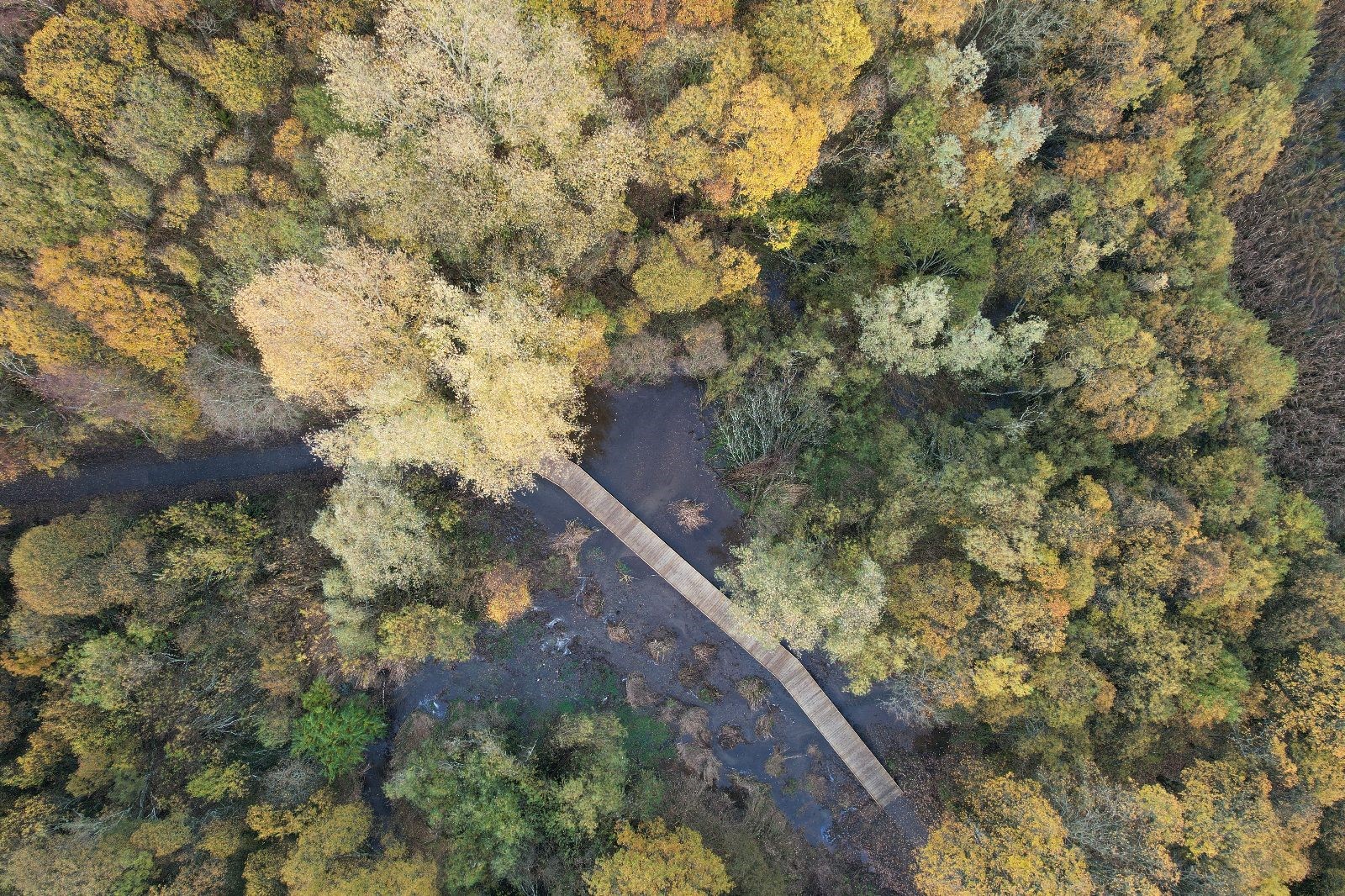
Improving accessibility has been an important aim for this much-loved site. To achieve this, sections of the footpath – which in places forms a circular route – have been elevated and set back. A new bridge and boardwalk have been installed so the burn can flow naturally, while walkers can still enjoy and feel connected to the burn.
Fife Council and the Scottish Environment Protection Agency (SEPA) have commissioned the Back Burn river restoration project. This will see a total of 5.8km of watercourses restored to their more natural condition.
The project is being managed by Fife Coast and Countryside Trust (FCCT), supported initially with funding from the Water Environment Fund. It forms part of the wider Leven Programme. The project’s technical designers are cbec eco-engineering and the contractors are McGowan Environmental Ltd.
“It’s absolutely fantastic to see this project progressing and transforming the Back Burn into a thriving natural habitat that benefits both wildlife and the local community,” said Councillor Jan Wincott, Fife Council spokesperson for environment and climate change.
“Connecting with nature is so important in our day to day lives. And I’m delighted that the River Leven restoration project is creating a space where residents and visitors can enjoy all the natural landscape has to offer.”
Balbirnie Estate
The next phase of construction work, along around 1km of the Back Burn through Balbirnie Estate, downstream from Coul Den, is scheduled for 2026. This includes weir removal, removal of riverbank engineering, then rock ramp construction and proposed realignment of the burn to follow a more natural channel.
Lynda Gairns is a River Restoration Specialist at SEPA. She said: “SEPA’s Water Environment Fund are committed to improving rivers that have been historically altered throughout Scotland, for the benefit of nature, climate and people.”
Transformation
Jeremy Harris, Chief Executive at FCCT, said: “I’ve been excited to see the transformation at Coul Den, knowing it will benefit species biodiversity and local communities. Locals and visitors feedback to us that this is a much-loved Local Nature Reserve.”
A similar river restoration project is being developed for the Whinny and Brankholm Burns in Rosyth.
Pictures courtesy of McGowan Environmental, Fife Council and FCCT.
Recent News
Back Burn river restoration celebrates completion with recognition in prestigious nature awards
Friday September 11, 2026

Investment points to signage improvements on Fife Coastal Path
Wednesday September 9, 2026
Global company’s donation helps maintain Fife Coastal Path
Wednesday August 26, 2026