- experience
- engage
- enjoy
River restoration works progress at Balbirnie Park
Publish Date: Wednesday June 17, 2026
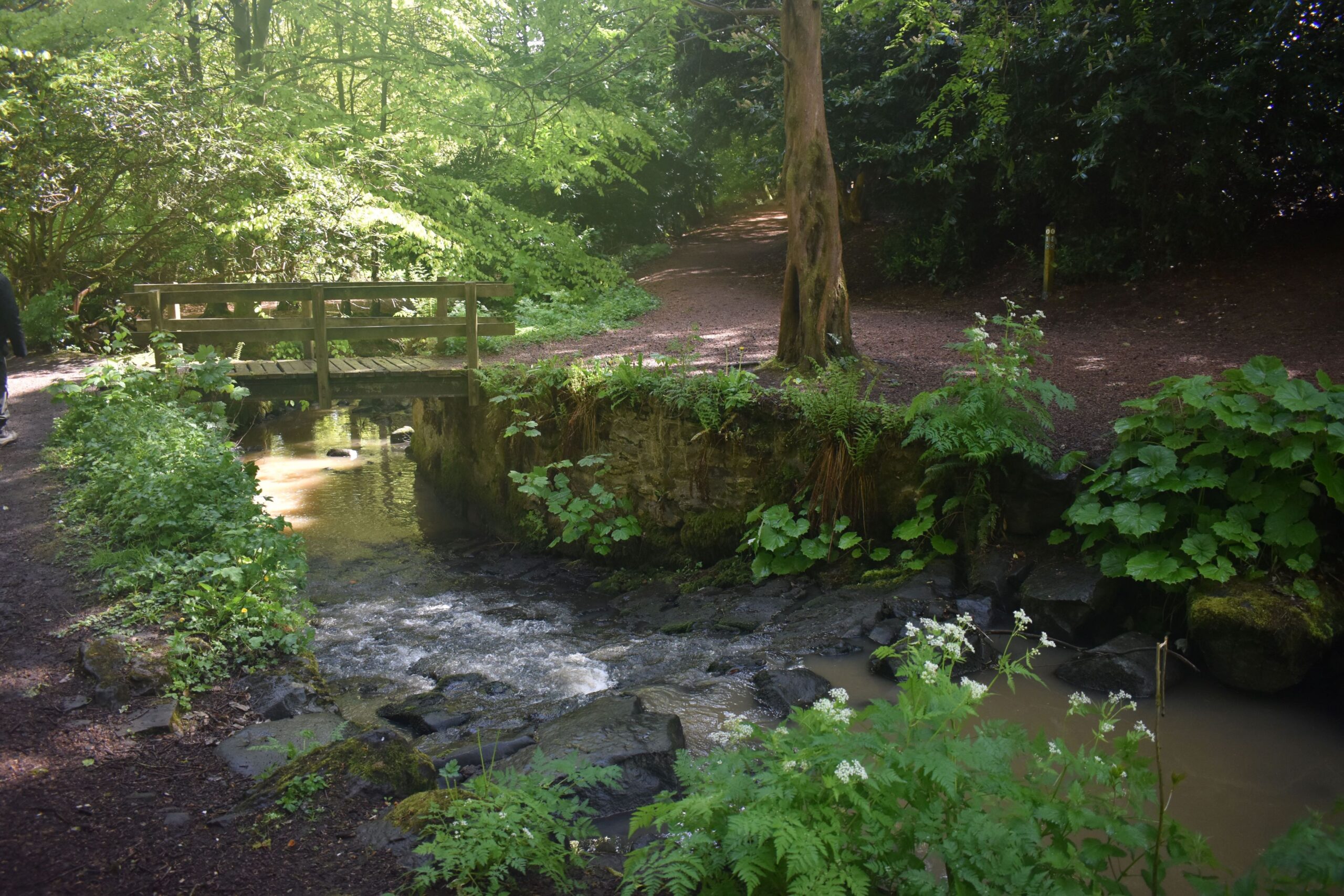
The Restoring the Back Burn Project has been underway over the last year and works continue this summer at Balbirnie Park.
Design consultants CBEC eco-engineering and construction contractors McGowan Environmental Ltd have been at work on site since early May. The site comprises the historic designed landscape of Balbirnie House which is now a valued public greenspace.
Work has started upstream of Balbirnie Park Golf Course which is where hard banking and small weirs are being removed. Also, nature-like rock ramps are being constructed over larger weirs.
Downstream
The project will progress downstream with works planned for the other side of the golf course. These works include removing gabion baskets and other hard engineering on the riverbank, weir removal, construction of rock ramps, and improving the ford and footbridge. These are expected to be complete by October 2026.
The Balbirnie Park works follow Phase 1 of the Restoring the Back Burn project at Coul Den completing in October 2025. With spring bringing vegetation growth, the site is now starting to look green again. And alongside the site greening up, the restoration features such as nature-like rock ramps are starting to settle in.
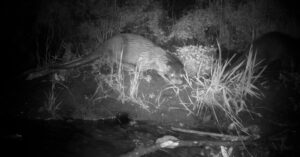
A pair of otter have been seen in the re-aligned channel above Coul Reservoir! And native brown trout have been seen swimming in the delta underneath the new boardwalk. As well as these, abundant frog spawn has been observed in the old artificial channel which now provides pond habitat.
At Coul Den, six impassable fish barriers were removed or otherwise mitigated. This resulted in the opening up of a much larger stretch of habitat for fish species including the resident trout population. Similarly, a further five barriers will be removed at Balbirnie Park.
Lynda Gairns is River Restoration Specialist at SEPA. She says: “SEPA are delighted to see the second and last phase of the Back Burn restoration project get off to a successful start so early in the summer. The improvement works are a great addition to the successful works carried out at Coul Den. It’s wonderful to see the river and surrounding greenspace thriving again.”
Great asset
Project managers FCCT carried out a community survey which showed that 85% of respondents felt positively about the Coul Den works. One respondent said: “I appreciate the efforts made to enhance the ecological balance at Coul Den. It’s a great asset to our community.”
A total of 70% of respondents said the works made them more likely to visit the site, and 81% said their access to the site had been improved.
Some respondents were happy to see the heritage features of the site retained: “Given the importance of Coul Den to the industrial heritage of Glenrothes it is nice to see that historic features of the site have been kept.”
While others commented on the changes in biodiversity they are noticing. One said: “Didn’t see any migrating toads trapped below the path at the outlet this spring, which was a feature over past years – that was lovely to see”. Another commented: “…to be honest I wasn’t sure about the changes. But as time has progressed and nature has fought back. I’m beginning to love the changes.”
Positive feedback
Councillor Jan Wincott is Fife Council spokesperson for environment and climate change, She said: “The positive feedback from the Coul Den phase shows just how much these projects are valued by local communities. We’re pleased to see that work is now continuing downstream. And we’d like to thank visitors for their patience while these important improvements are carried out.”
The Restoring the Back Burn project is part of a landscape-scale vision for river restoration in Fife. The River Leven Restoration project was completed in 2024. In West Fife, the Rosyth River Restoration project has received funding for its design phases. A partnership of SEPA, Fife Council and FCCT are delivering the projects.
Visitors are asked to please adhere to diversion signage.
* Main picture shows the footbridge which will be upgraded and the weir where a rock ramp will be constructed over it to aid fish passage.
Recent News
Back Burn river restoration celebrates completion with recognition in prestigious nature awards
Friday September 11, 2026

Investment points to signage improvements on Fife Coastal Path
Wednesday September 9, 2026
Global company’s donation helps maintain Fife Coastal Path
Wednesday August 26, 2026